
Abstract
Agricultural cooperatives are essential for strengthening rural economies by enhancing market access, supporting farmer livelihoods, and promoting sustainable agriculture. Changing consumer preferences toward organic and value-added products have highlighted the need for effective marketing strategies within these enterprises. Intensifying competition requires cooperatives to adopt customer-oriented marketing to improve consumer awareness, build trust, and encourage repeat purchases. This study examines how marketing activities influence consumer awareness, purchase behaviour, customer satisfaction, and recommendation intention. A descriptive research design was used, gathering primary data via a structured questionnaire from consumers of agricultural products, alongside secondary data from academic and industry sources. Data were analyzed using statistical tools including percentage analysis, mean, median, mode, correlation, multiple regression, reliability analysis, and ANOVA. Findings reveal that product quality, organic certification, fair pricing, and brand trust significantly drive purchasing decisions. There are positive correlations between consumer awareness and purchase behaviour, brand trust and customer satisfaction, and customer satisfaction and recommendation intention. Regression analysis shows quality and certification are major predictors of purchase behaviour. Digital engagement and marketing communication are also crucial for market participation. The study concludes that agricultural cooperatives can boost customer acquisition and retention by enhancing their promotional activities, digital presence, and brand identities.
Keywords
1. Introduction
Agriculture is a critical sector for economic growth, employment, and rural development. The success of this sector relies heavily on efficient marketing systems that connect producers with consumers, ensuring fair returns for producers and quality products at reasonable prices for consumers.
Agricultural cooperatives help farmers overcome market challenges by facilitating collective action, improving bargaining power, and reducing reliance on intermediaries. Recently, consumer behaviour has shifted, with rising demand for healthy, safe, sustainable, and organic products creating new opportunities for cooperatives. This shift necessitates effective marketing strategies to communicate product benefits and build customer relationships. Despite their importance, many cooperatives still rely on traditional marketing and lack a strong digital presence, which limits their competitiveness. This study investigates the relationship between marketing strategies and consumer behaviour to provide insights for cooperative managers and policymakers.
2. Conceptual Framework
The research is guided by Consumer Decision-Making Theory and Relationship Marketing Theory. The former explains how consumers move from awareness to post-purchase evaluation, while the latter focuses on building trust and loyalty through engagement.
Conceptual Model: Marketing Activities → Consumer Awareness → Brand Trust → Purchase Behaviour → Customer Satisfaction → Recommendation Intention.
3. Review of Literature
Consumer Behaviour: Consumers increasingly value quality, safety, nutrition, and environmental impact. Health consciousness and food safety drive organic product purchases. Trust, authenticity, and consistent quality are crucial for positive consumer attitudes.
Digital Marketing: Digital platforms allow targeted communication and interactive engagement. Digital marketing and social media significantly improve product visibility and influence purchase intentions, especially among younger consumers.
Brand Trust and Satisfaction: Trust reduces perceived risk and drives repeat purchases and loyalty. Trust in certifications and fair pricing bolsters customer confidence, leading to satisfaction and product advocacy.
Marketing in Cooperatives: Cooperatives balance commercial and social goals. Modernization and digital transformation are vital for their competitiveness, though empirical studies on marketing within cooperatives remain limited.
4. Research Objectives
To address the problems outlined, this study seeks:
- To examine consumer awareness regarding agricultural cooperative products and services.
- To identify the factors influencing consumer purchase behaviour towards these products.
- To evaluate customer satisfaction and recommendation behaviour in agricultural cooperative markets.
5. Research Hypotheses
- H1: Consumer awareness positively influences purchase behaviour.
- H2: Brand trust positively influences customer satisfaction.
- H3: Marketing effectiveness positively influences consumer awareness.
- H4: Customer satisfaction positively influences recommendation behaviour.
6. Research Methodology
A descriptive, cross-sectional quantitative approach was used. Primary data was collected via a structured questionnaire with a 5-point Likert scale (1 = Strongly Disagree to 5 = Strongly Agree). Secondary data was sourced from academic journals, books, and reports. Convenience sampling was employed targeting consumers of agricultural products, yielding 180 valid responses.
Scale Measurement & Reliability Analysis
| Variable | Number of Items | Cronbach's Alpha |
|---|---|---|
| Consumer Awareness | 4 | 0.78 |
| Brand Trust | 5 | 0.82 |
| Purchase Behaviour | 4 | 0.80 |
| Customer Satisfaction | 4 | 0.84 |
| Recommendation Intention | 3 | 0.76 |
| Overall Scale | - | 0.81 |
Factor Analysis
| Factor | Major Variables Included | Variance Explained (%) |
|---|---|---|
| Product Attributes | Quality, Organic Certification, Availability | 32.4% |
| Marketing Influence | Awareness, Promotion, Communication | 24.7% |
| Relationship Factors | Trust, Satisfaction, Recommendation | 19.6% |
| Total Variance Explained | - | 76.7% |
7. Data Analysis and Interpretation
Demographic Profile of Respondents (N=180)
- Age: The majority (57.2%) are aged 21-30 years, indicating high interest among younger consumers.
- Gender: Males constitute 55.6% of the sample, while females make up 43.9%.
- Location: Respondents are split evenly between Sirsi (52.8%) and Siddapur (47.2%).
Consumer Awareness Analysis
General awareness is exceptionally high, with 98.3% of respondents aware of agricultural cooperative products. Social media was reported as the top source of awareness (52 responses), followed by friends and family (45), local markets (44), and agricultural fairs (39).
Consumer Perception Towards Marketing Activities
| Variable | Mean | Median | Mode |
|---|---|---|---|
| Fair Pricing | 3.87 | 4.00 | 4 |
| Marketing Effectiveness | 3.48 | 3.00 | 3 |
Purchase Experience and Frequency
A total of 83.3% of respondents have purchased cooperative products. The most common purchasing frequency is Monthly (34.4%), followed by Rarely (26.7%), and Occasionally (22.8%).
Product Preferences
Organic and value-added products are highly sought after. Top preferences include: Organic Food Products (57 responses), Spices (44 responses), Jackfruit-Based Products (43 responses), and Coconut and Cashew Products (39 responses).
Factors Influencing Purchase Decisions
| Variable | Mean | Median | Mode |
|---|---|---|---|
| Organic Certification | 3.68 | 4.00 | 4 |
| Product Quality | 3.66 | 4.00 | 4 |
| Price | 3.60 | 4.00 | 4 |
| Recommendations | 3.41 | 3.00 | 3 |
| Product Availability | 3.09 | 3.00 | 3 |
| Brand Trust | 3.04 | 3.00 | 3 |
Customer Satisfaction and Recommendation Behaviour
The mean satisfaction score is 3.84, indicating general satisfaction with cooperative products. Furthermore, 76.6% of respondents are willing to recommend the products ("Definitely Yes" at 28.3% and "Probably Yes" at 48.3%).
Suggestions for improvement include Better Product Availability (73 responses), More Advertisements (61), Better Pricing (60), and a Stronger Online Presence (57).
Correlation Analysis
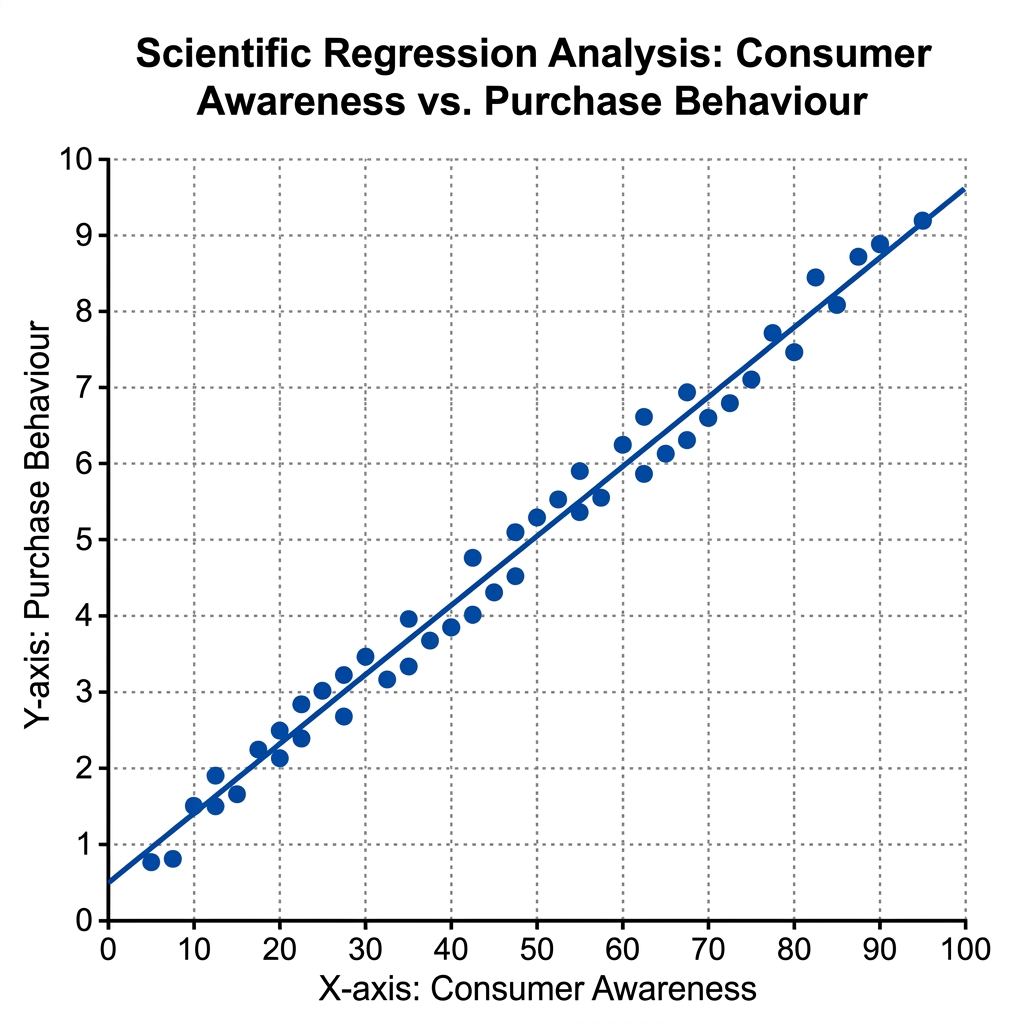
- Consumer Awareness and Purchase Behaviour: r = 0.61 (Strong Positive).
- Brand Trust and Customer Satisfaction: r = 0.58 (Moderate Positive).
- Marketing Effectiveness and Consumer Awareness: r = 0.49 (Moderate Positive).
- Customer Satisfaction and Recommendation Intention: r = 0.74 (Strong Positive).
Multiple Regression Analysis
| Predictor Variable | Beta Coefficient | Significance (p-value) |
|---|---|---|
| Organic Certification | 0.367 | 0.000 |
| Product Quality | 0.342 | 0.000 |
| Brand Trust | 0.214 | 0.004 |
| Price | 0.186 | 0.012 |
| Product Availability | 0.121 | 0.048 |
Analysis of Variance (ANOVA)
ANOVA tested if customer satisfaction differed by age group, resulting in an F value of 2.184 and significance of 0.072. Since p > 0.05, the null hypothesis is accepted; there is no significant difference in customer satisfaction across age groups.
Hypothesis Testing Results
All four proposed hypotheses (H1 to H4) were supported by the statistical analysis, confirming the interconnected nature of marketing strategies and consumer behaviour.
8. Discussion
The high consumer awareness shows cooperatives have strong market visibility, supporting previous research on the value of marketing communication. Product quality and organic certification heavily influence purchasing, reflecting a shift toward healthier consumption. The strong links between awareness, purchase behaviour, trust, satisfaction, and recommendation intention emphasize the need for continuous promotional activities and trust-building to drive word-of-mouth marketing.
9. Managerial Implications
Managers should adopt customer-oriented marketing, maintaining high-quality standards and communicating certification info clearly. Investing in digital platforms is essential for engaging younger demographics. Additionally, improving product availability and utilizing customer feedback will enhance loyalty and purchase frequency.
10. Policy Implications
Policymakers should support cooperatives in adopting modern digital marketing through training programs. Policies should also encourage the certification of organic products and invest in infrastructure (transportation, storage) to improve product availability and market access.
11. Limitations & 12. Future Research Directions
Limitations: The study's geographical constraints, use of convenience sampling, cross-sectional nature, and reliance on self-reported data limit its generalizability.
Future Research: Future studies could conduct regional comparisons, use longitudinal designs, explore the impact of AI and e-commerce, or compare cooperatives with private agribusinesses.
13. Conclusion
Marketing activities critically influence consumer awareness, decisions, and satisfaction within agricultural cooperatives. Consumers expect engagement through both traditional and digital channels. Cooperatives that blend their traditional focus on community and transparency with modern marketing practices will achieve superior market performance and further rural development.
14. Suggestions
- Strengthen digital marketing and promotional activities.
- Maintain product quality and communicate certifications.
- Improve supply chain management for better product availability.
- Develop stronger cooperative brand identities and loyalty programs.
- Expand e-commerce facilities and conduct regular satisfaction surveys.
References
- Bhattacharya, R., & Sen, S. (2025). Relationship marketing in agricultural sectors: The role of trust and solidarity. Journal of Cooperative Science, 14(2), 78–92. https://doi.org/10.1016/j.jcoop.2025.02.001
- Hegde, G. (2024). Modernizing Rural Cooperatives: Marketing, Supply Chain, and Digital Transition (3rd ed.). Academic Press, Boston.
- Jenkins, S., & Miller, D. (2025). The digital shift in agricultural logistics and consumer outreach. International Journal of Agricultural Business, 32(4), 214–228. https://doi.org/10.1111/ijab.2025.04.012
- Osei, A. (2023). Consumer loyalty structures and member satisfaction inside regional cooperative associations. Global Development Review, 18(3), 142–159.